3D-Printed Biodegradable Microneedles for Drug Delivery
My PhD research focuses on the development of stereolithography-printed dissolving microneedle patches using photocurable poly(β-amino ester)-based materials. The aim is to create biodegradable microneedle systems that can penetrate skin, dissolve after application, and potentially support the intradermal delivery of biologics such as nucleic acid-based therapies.
Results Snapshot
This page provides a short visual overview of my work on CAPbaE dissolving microneedle patches, including optical microscopy, SEM imaging, and micro-computed tomography.
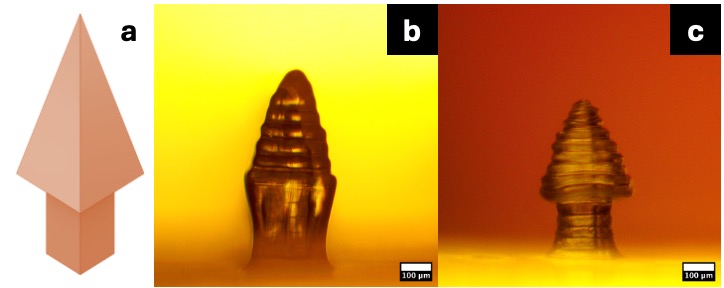
Optical comparison of print fidelity
(a) CAD design of the arrowhead microneedle. (b) Optical microscope image of the PbAE:ACMO:Irgacure819® formulation, showing overpolymerisation around the arrowhead geometry. (c) Optical microscope image of the CAPbaE(PbAE:ACMO:Curcumin:Irgacure819®), showing improved shape fidelity.
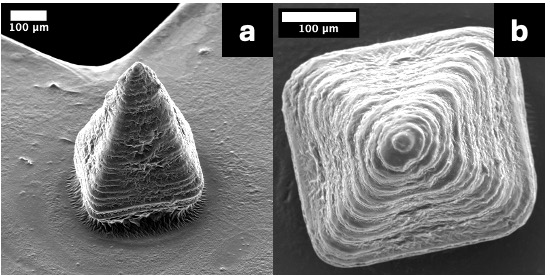
SEM morphology of printed microneedles
(a) SEM micrograph of an individual CAPbaE microneedle viewed at 45°(b) SEM top-view micrograph of an individual microneedle tip.
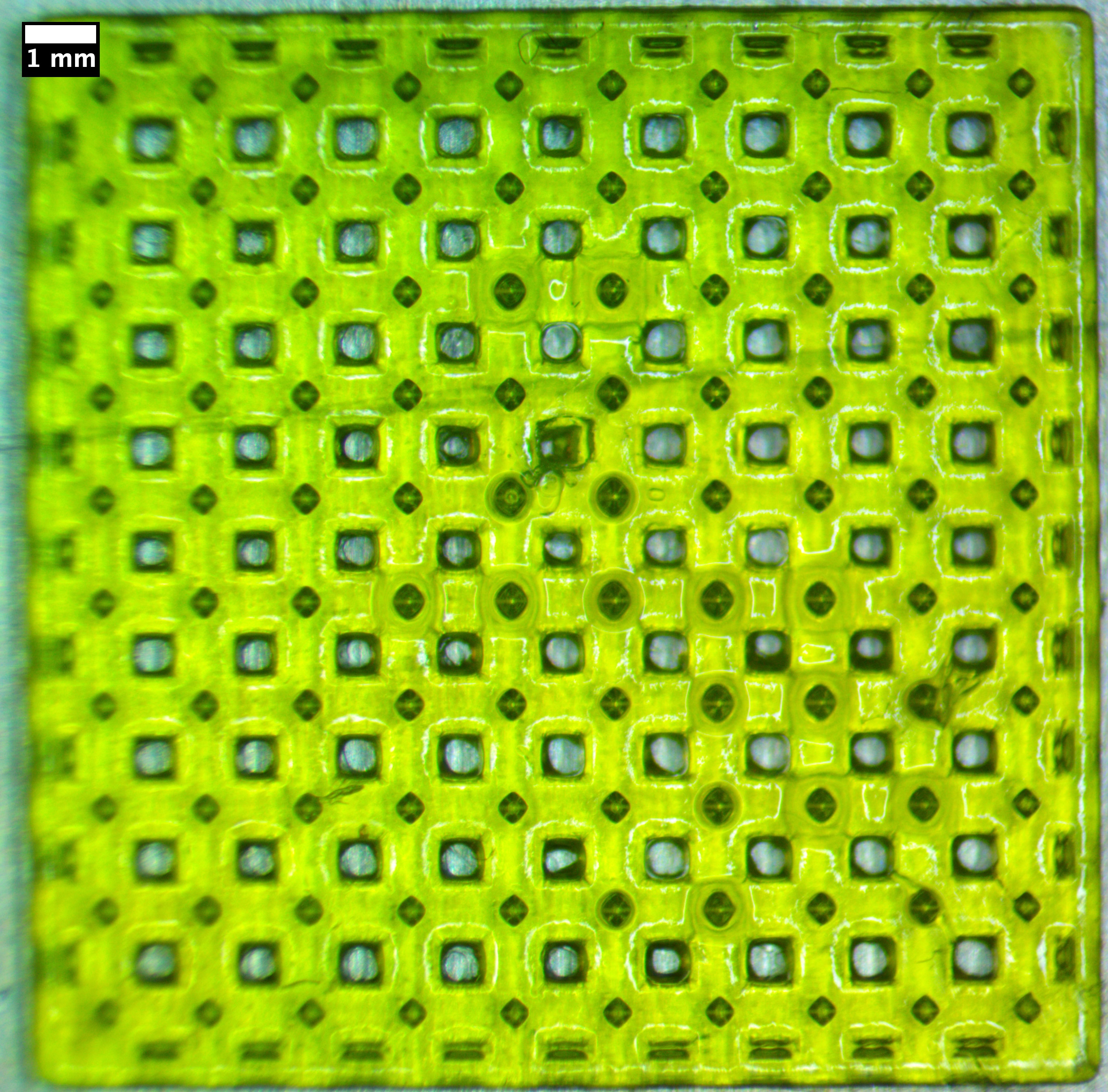
Grid-base CAPbaE microneedle patch
Optical microscope image of the CAPbaE dissolving microneedle patch with a grid-like base structure. The grid base was introduced to reduce warping compared with a solid monolithic base and to improve patch shape stability.
Key Results
formulations screened
optimised resin system
mean tip diameter
maximum insertion depth
dissolution at 37 °C
µCT Video
The video below shows a micro-computed tomography reconstruction of a CAPbaE microneedle patch, providing a three-dimensional view of the printed array and grid-based structure.
Future Direction
Future work will focus on drug loading, biocompatibility, stability and skin insertion studies. These studies will help assess the potential of CAPbaE microneedle patches as a platform for biodegradable intradermal drug delivery.
Contact
If you would like to discuss the work, collaborate, or ask questions about the project, please feel free to get in touch.